

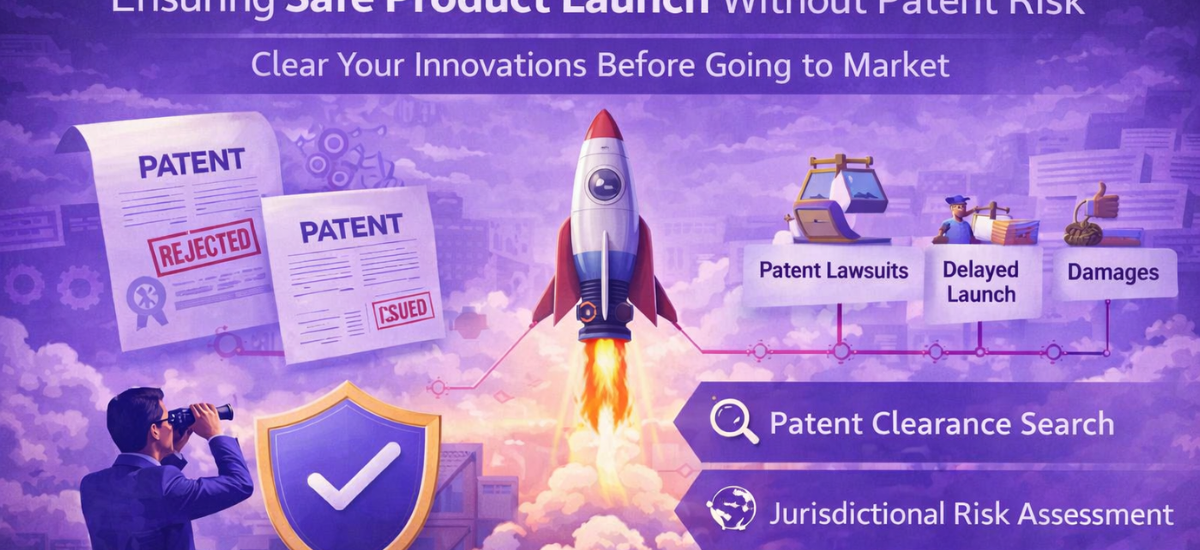
Launching a new product involves more than engineering and marketing — it requires patent clearance. A Freedom-to-Operate (FTO) analysis determines whether a product can be commercially used without infringing existing patents.
What Is Freedom-to-Operate?
FTO analysis evaluates active patents in target markets to assess whether a product or process falls within claim scope of existing rights.
It answers a key question:
Can we legally sell or use this technology?
Why FTO Matters Before Commercialization
Skipping FTO analysis can lead to:
- Patent infringement lawsuits
- Product launch delays
- Licensing disputes
- Market withdrawal
- Financial damages
Patent risk can halt commercialization even after heavy R&D investment.
When Should FTO Be Conducted?
FTO is essential:
- Before product launch
- Before entering new countries
- During product design stage
- Before manufacturing scale-up
- Before technology acquisition
Early analysis allows design changes before costly production.
What FTO Analysis Provides
A professional FTO study delivers:
- Relevant active patent identification
- Claim-to-product comparison
- Jurisdictional risk assessment
- Design-around opportunities
- Licensing need insights
This enables confident business decisions.
Who Needs FTO?
- Technology companies
- Manufacturers
- Startups scaling products
- Investors evaluating IP risk
- Legal teams assessing exposure
Any product-based business should verify patent clearance.
Conclusion
Innovation alone does not guarantee market freedom. A Freedom-to-Operate analysis ensures your product can be launched without legal barriers.